The Shining Uncut
Wow. What a route. More than I expected. The Shining Uncut will live on as one of the best climbs of my life. It had all the elements of a great climb. A big beautiful mountain. A straight line up the center of the biggest face. Challenging and sustained climbing. Good to the very end.
One day of rest after Castles in the Sky and Mike Kerzhner and I went straight to the next project: The Shining Uncut on Mt. Louis. In 2011, Tommy Caldwell and Sonnie Trotter, in an epic effort, put up The Shining ground up, bolting on-lead. They returned to free it and called it 5.13+. In 2017, Sonnie came back and linked three of the hardest pitches in order to skip the hanging belays. The mega 90m ledge-to-ledge pitch variation he called “The Shining Uncut,” 5.14a, and would be a third piece to his “Canadian Alpine Trilogy.” Mike and I had our eyes on the trilogy, though we didn’t feel like we needed to repeat it in exactly the same way. The three routes just looked like quality hard routes in the mountains. So far I had made quick work of Castles in the Sky (5.14a). Sonnie’s trilogy version of Castles in the Sky, “War Hammer,” involved adding a bunch of low fifth to 5.11 climbing to take it to a summit, something we weren’t inspired to try. I was curious to try the Uncut version of The Shining though. It seemed like an appropriate challenge, and it’s usually nice to go ledge-to-ledge, one of the main reasons being that it’s more comfortable for the belayer!
We spent our first day working on the 90 meter “5.14a” crux pitch on a fixed line. It seemed close and Mike and I returned after a rest day optimistic about sending. On our first attempts, we both fell at about the same point—at about 75 meters! That’s a lot of climbing to do only just to fall! He messed up his sequence and I missed a good foot. Even though it would be a long shot, we thought it could go second try if every move was executed perfectly. On my second try, I climbed through some rain lower on the pitch, hoping to not slip on a wet foothold. The rain thankfully stopped and I fought from teetering off the crux. When I made it to the anchors, I couldn’t believe it! Trying to stand on tiny feet and hold on to small holds with almost 90 meters of rope weight was quite the mental challenge. I thought I was off multiple times. Sometimes you just keep holding on! The feeling of pushing that hard in that situation high on Mt. Louis was powerful! It was a perfect challenge.
After sending, I made two 45 meter rappels back down to the belay to give Mike another lead attempt. His foot slipped low and he decided to try the unlinked original version of The Shining. I jumared up to the hanging belay below the 5.13 crux pitch and Mike sent!
We were both sending a version of the route. At that point it was almost 6pm. We had started hiking 12 hours ago. And we had some serious climbing to go. A 5.12 pitch, a long 12+, a rappel behind the Diamond flake, and a long 11+ to the summit was all. But we were low on daylight and water—we had dropped a bottle and spilled another in our haul bag! We were onsighting at this point and really did not want to have to retry a pitch. Climbing 5.12 in the mountains is not like climbing 5.12 at the crag!
After I lead the first 5.12, Mike made a heroic lead up the 50 meter 12+ pitch to the top of the flake. This pitch was steep and follows an amazing crack that splits the top of the headwall. At the top of the Diamond, which is actually a massive flake separated from the mountain, we made a wild rappel into a chasm between the Diamond and Mt. Louis. One fun long 5.11+ pitch out of the ice box (literally!) took us to a belay just below the summit.
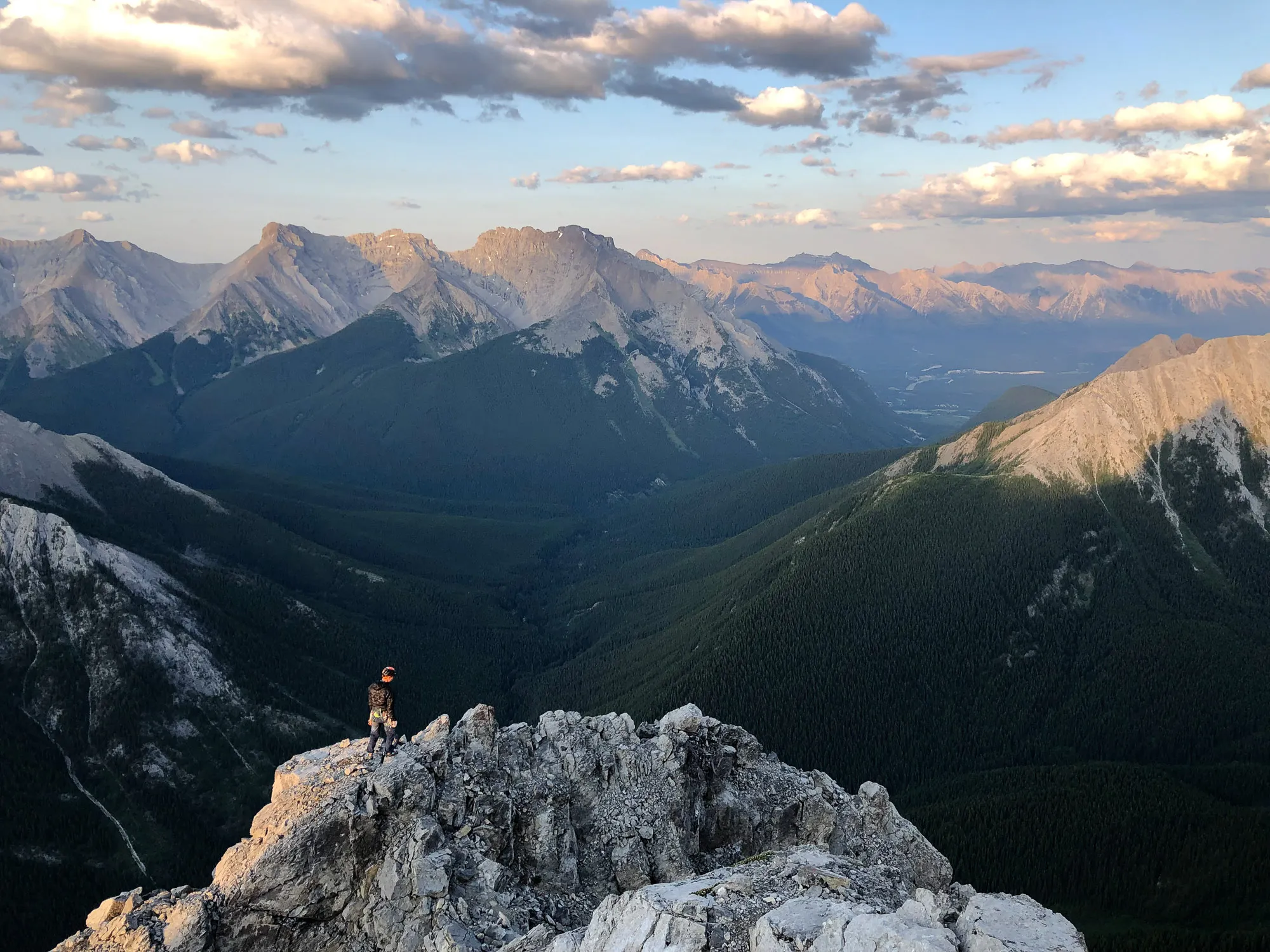
The summit views at dusk were wonderful. Almost no wind. Perfect visibility.
We finished the rappels in the light, down-scrambled by headlamp and hiked back to the car by 1am. What a day! A classic mountain adventure.
Beta
Linking the first three pitches on the Diamond for the “Uncut” requires some logistics. I climbed it with a 90m rope (the 8.5mm Beal Opera). The belayer could comfortably stay on the main ledge with a 90. I did not climb with two ropes but chose to thoughtfully extend close to half of the draws. Many single extensions, a few double and one triple extension on the P2 anchor straightened it out pretty well. Bring as many long draws as you can.
Follow approach beta for the Kain Route and continue past it to the prominent gulley. Scramble up the right side of the gully, staying left. You should see single bolt rappels regularly. The last bit is steeper and can be climbed/simuled in a single pitch with a few cams to the belay at the base of the Diamond.
You can rappel the route from the summit with a tag line. Use your tag line to pull yourself back across the chasm between the flake and the mountain. Thank you Sonnie Trotter and Tommy Caldwell for this amazing route put up in the best style!
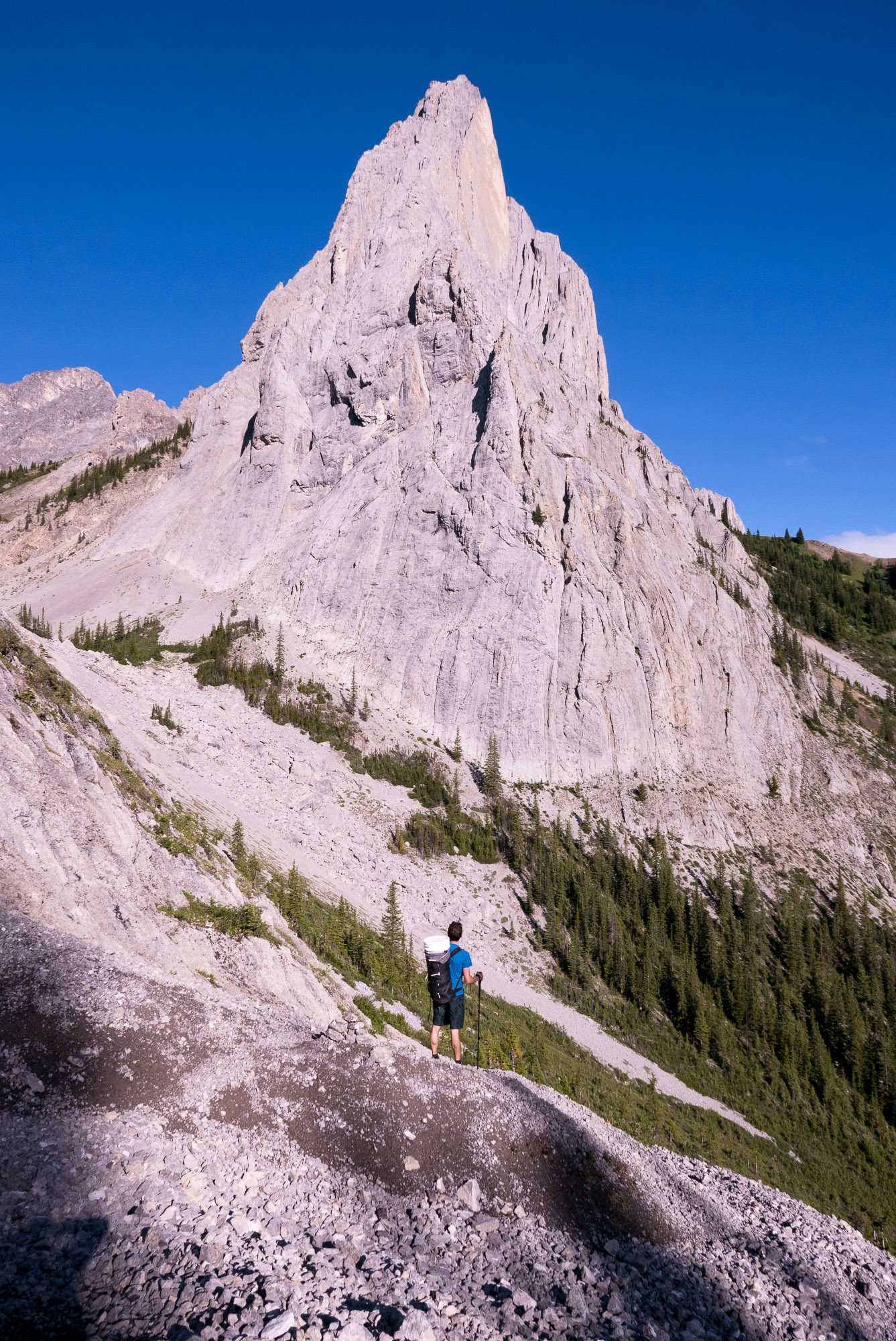 Mike approaching Mt. Louis the first day with a bucket to stash our rope—we weren’t sure how long this project would take!
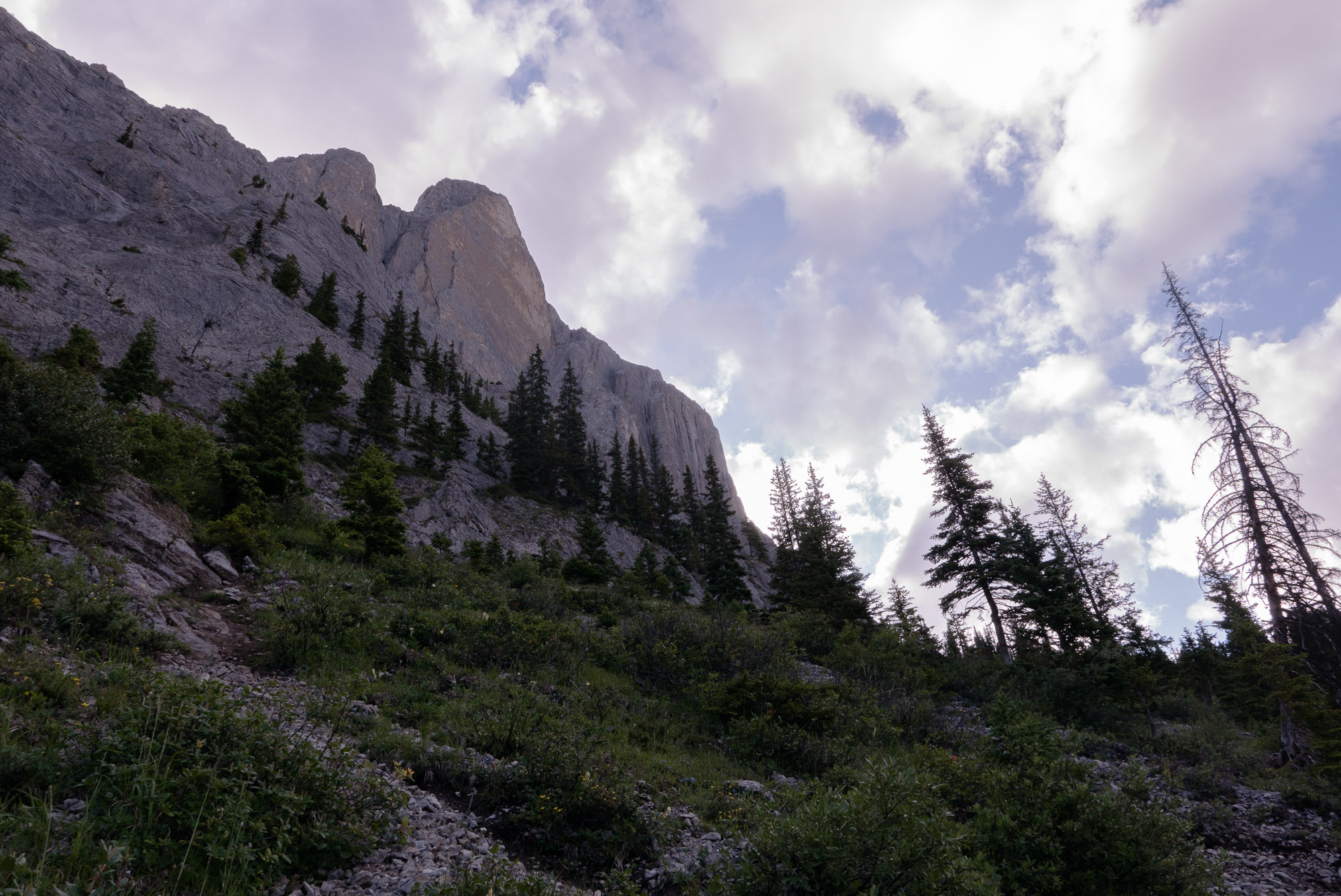 Looking up at the Diamond on the approach.
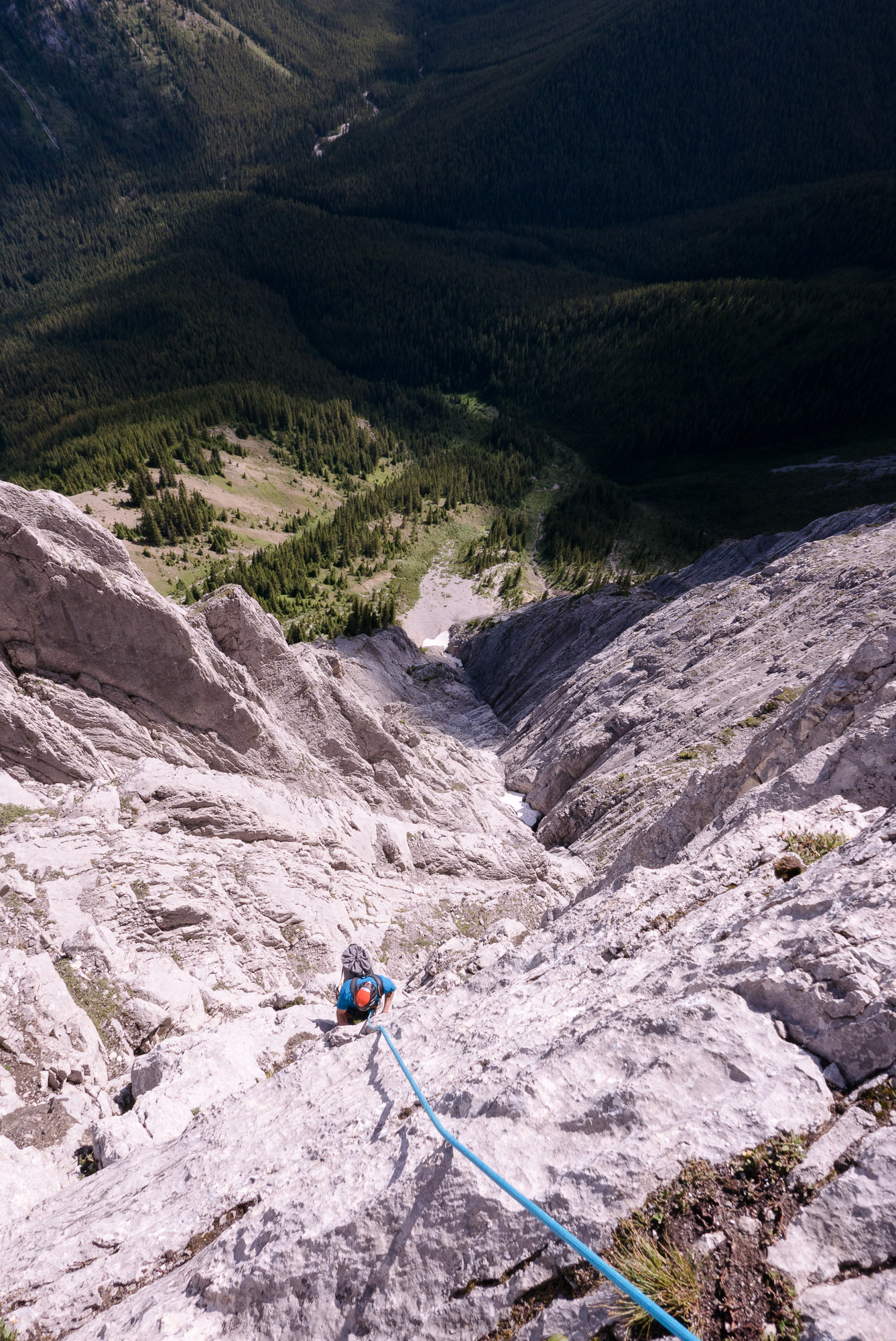 Mike following the last bit of climbing before the Diamond headwall.
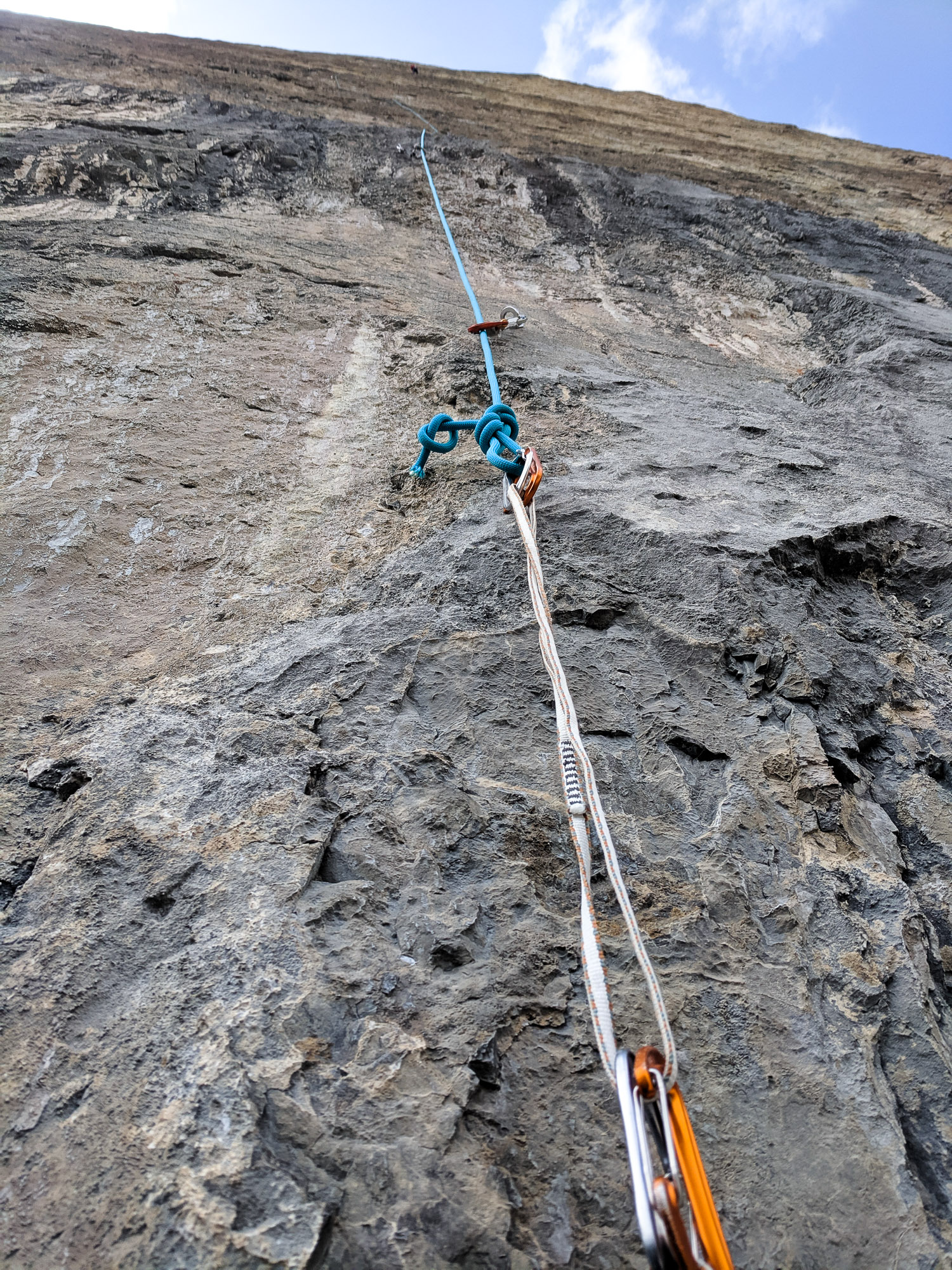 I quested up the first 3 headwall pitches in one rope length the first day. Because we hadn’t extended the draws yet, the rope drag was heinous. Mike wasn’t sure I’d make it so he extended the rope. Turns out we had just enough rope with the 90m.
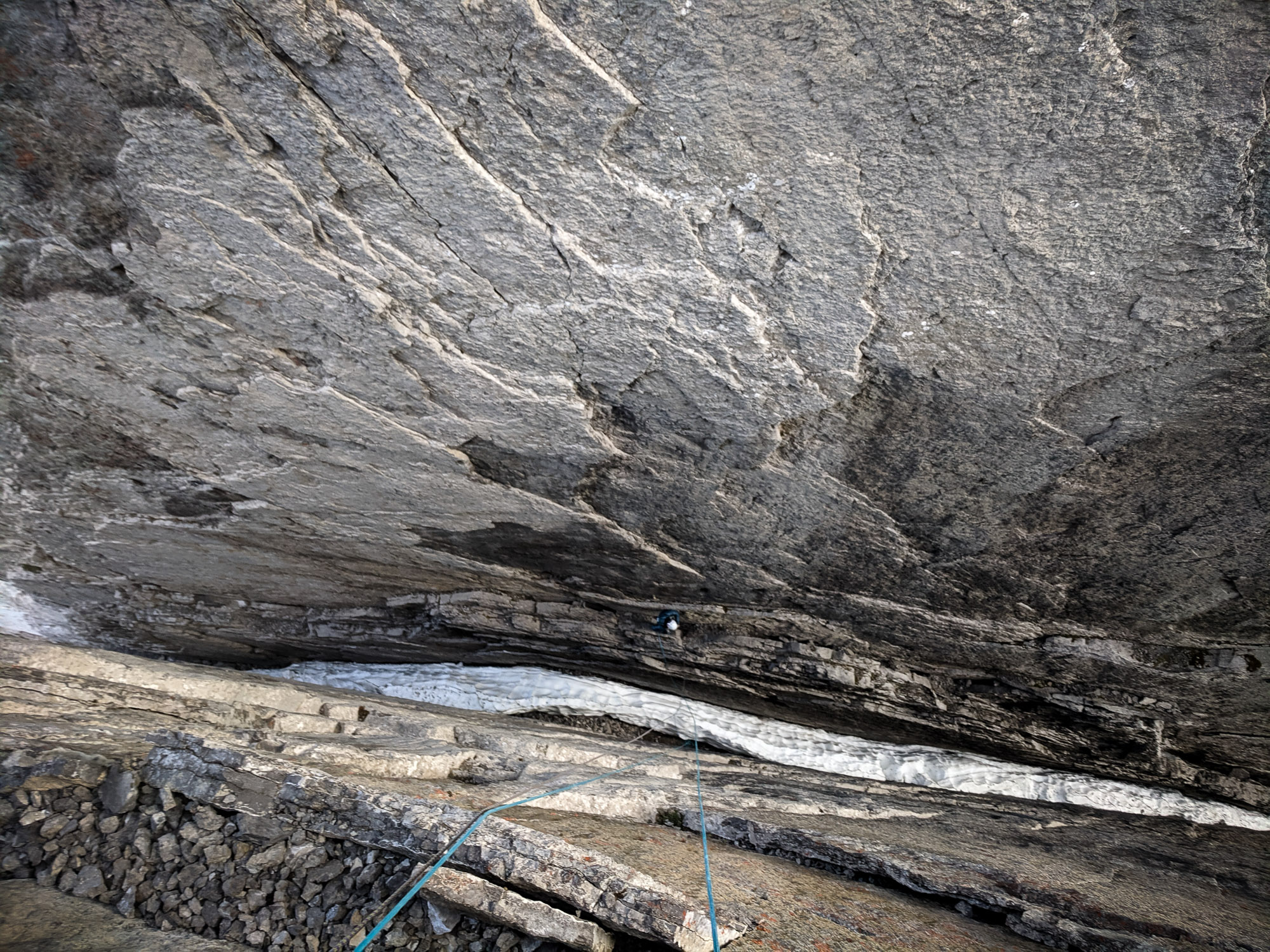 Mike looking down at me in the chasm between the Diamond flake and the mountain.
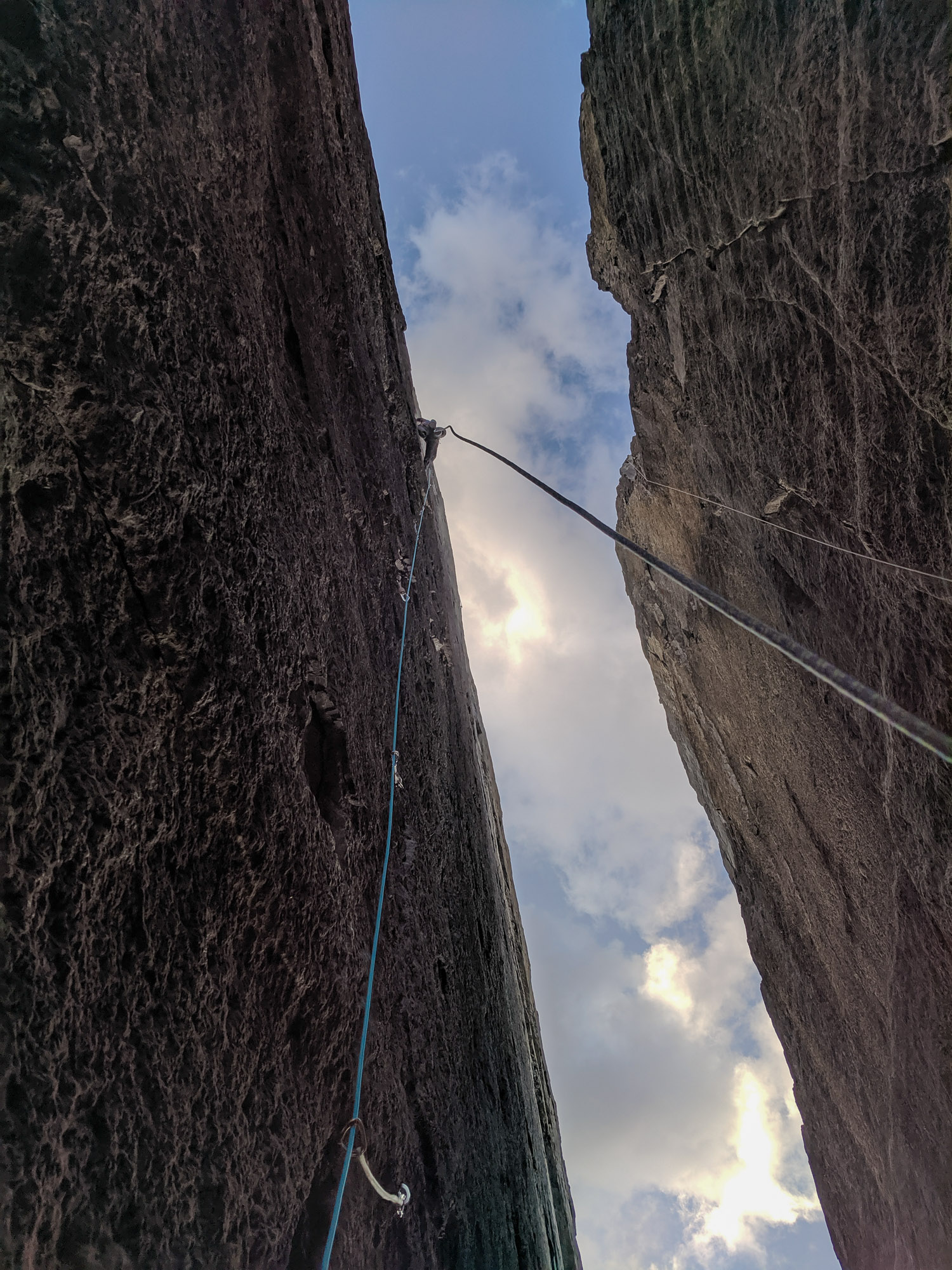 Me climbing out the other side of the chasm.
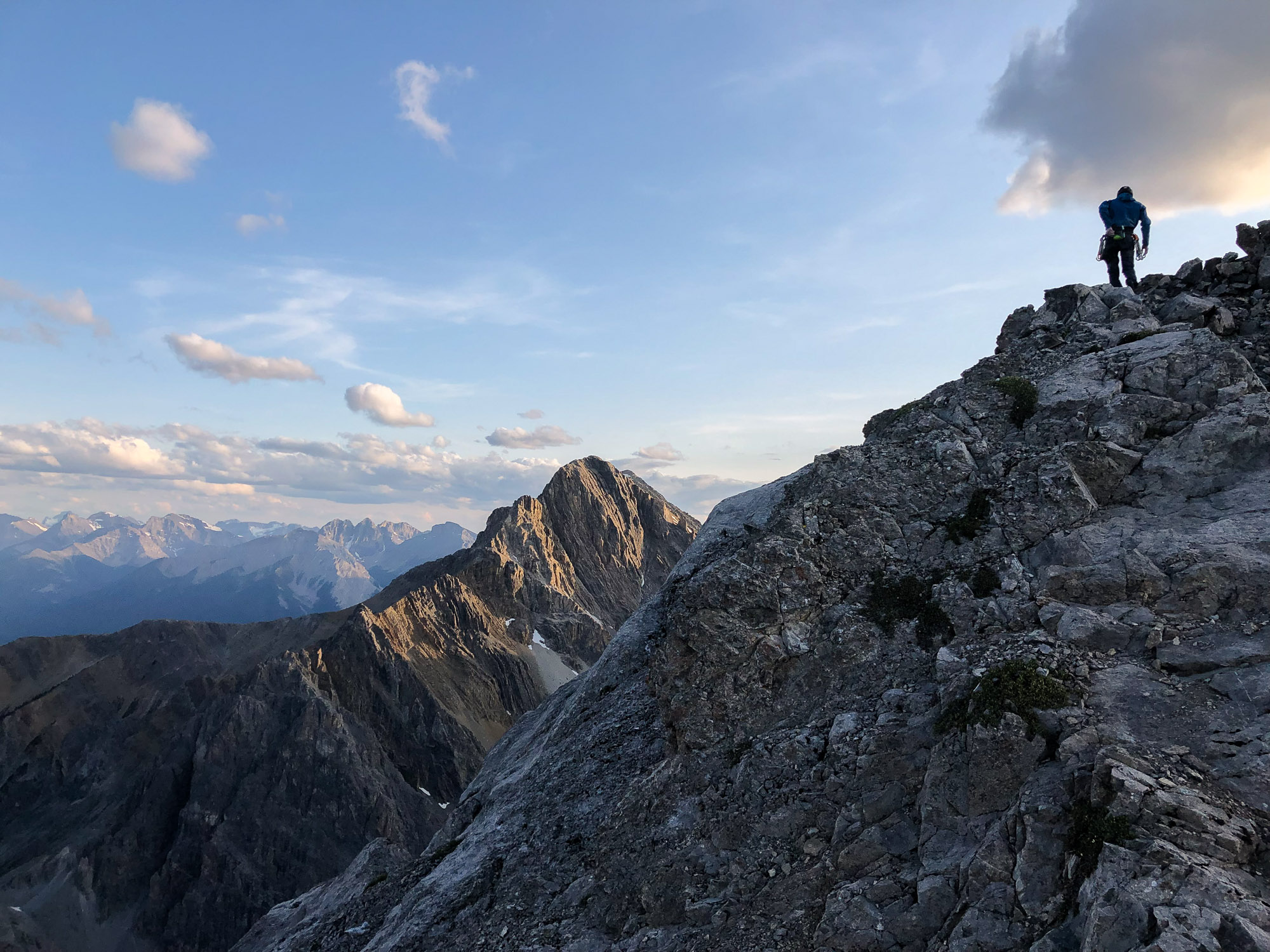 Mike near the summit of Mt. Louis.
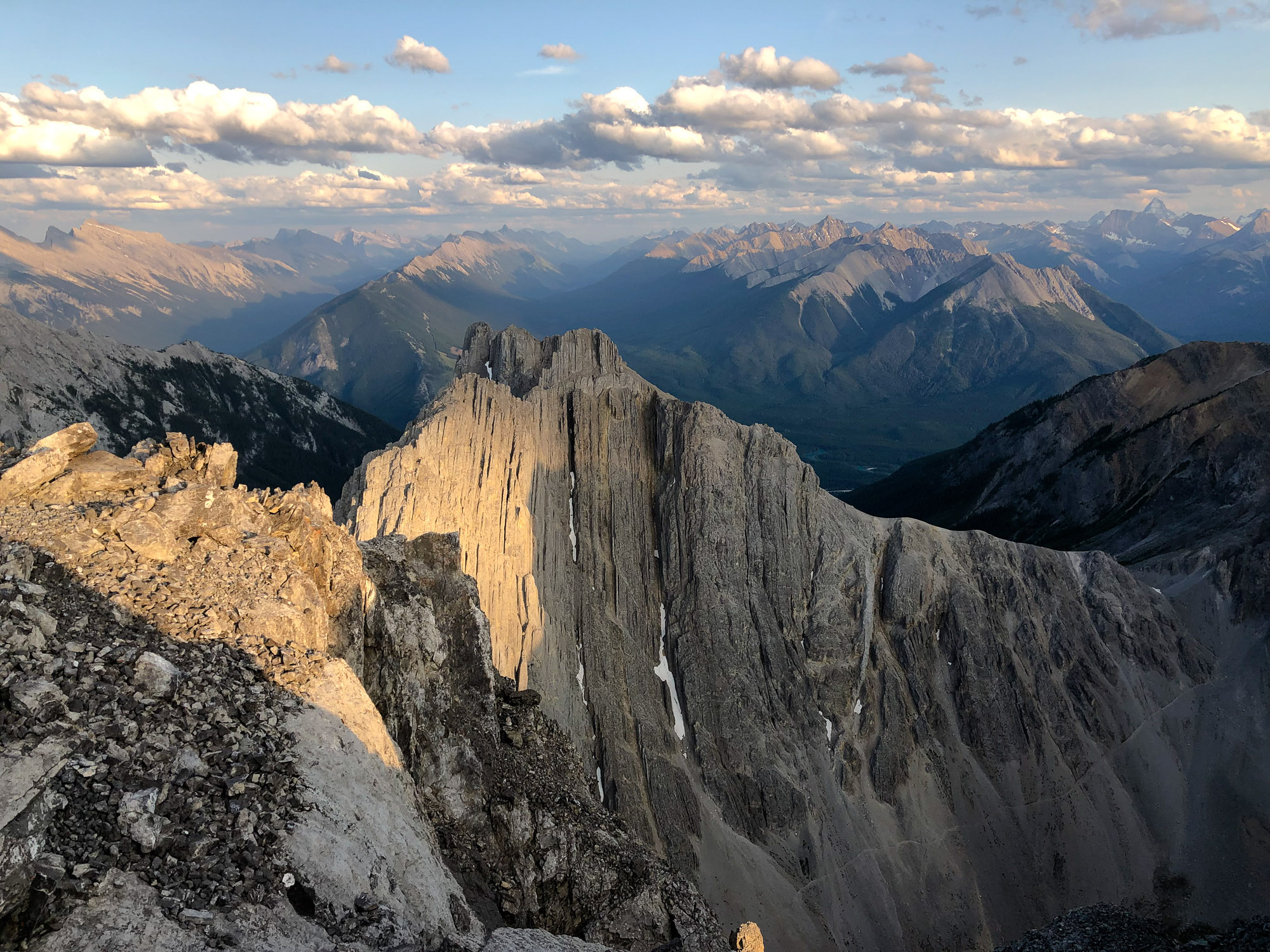 Summit views.
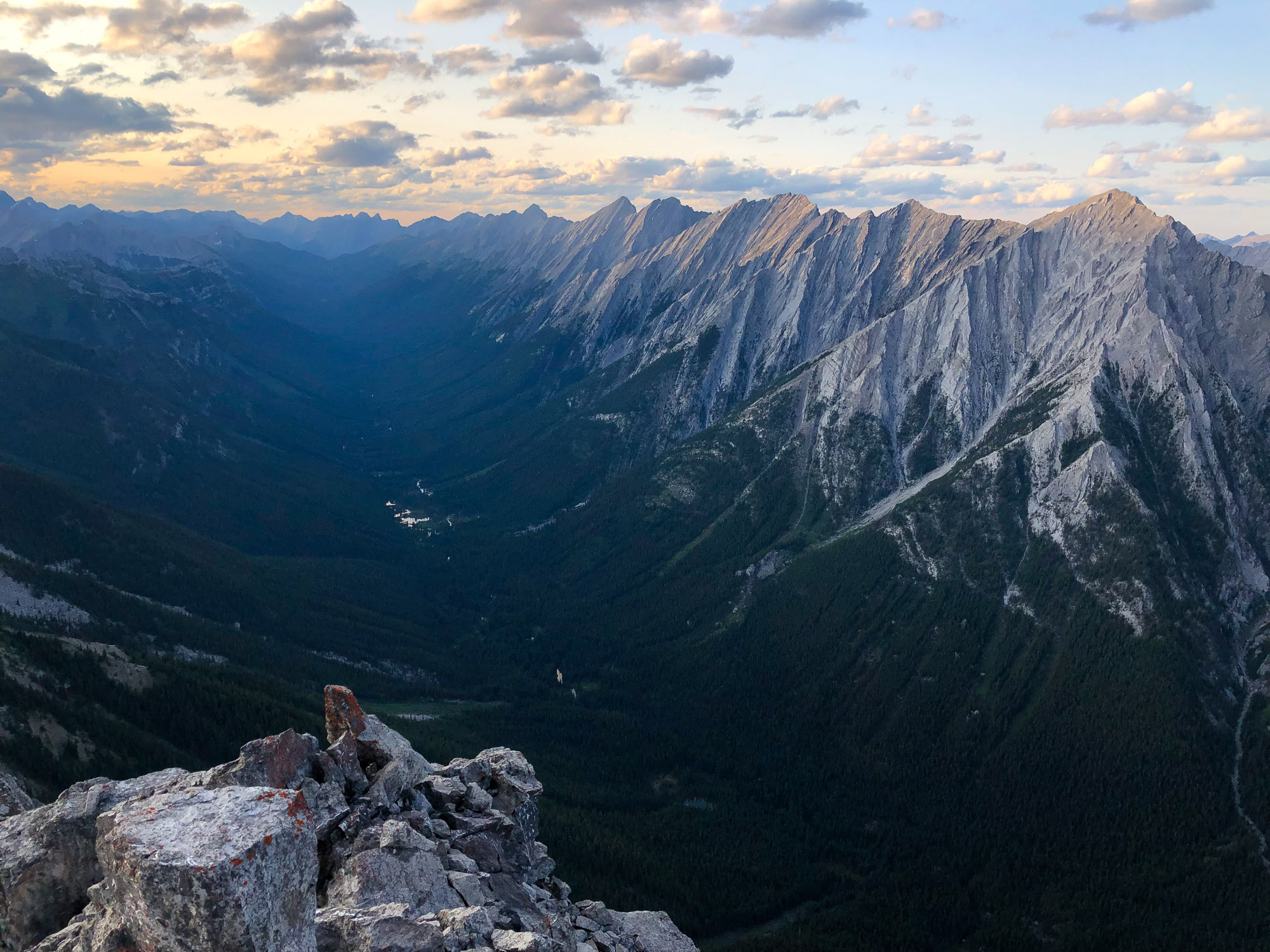 More summit views.
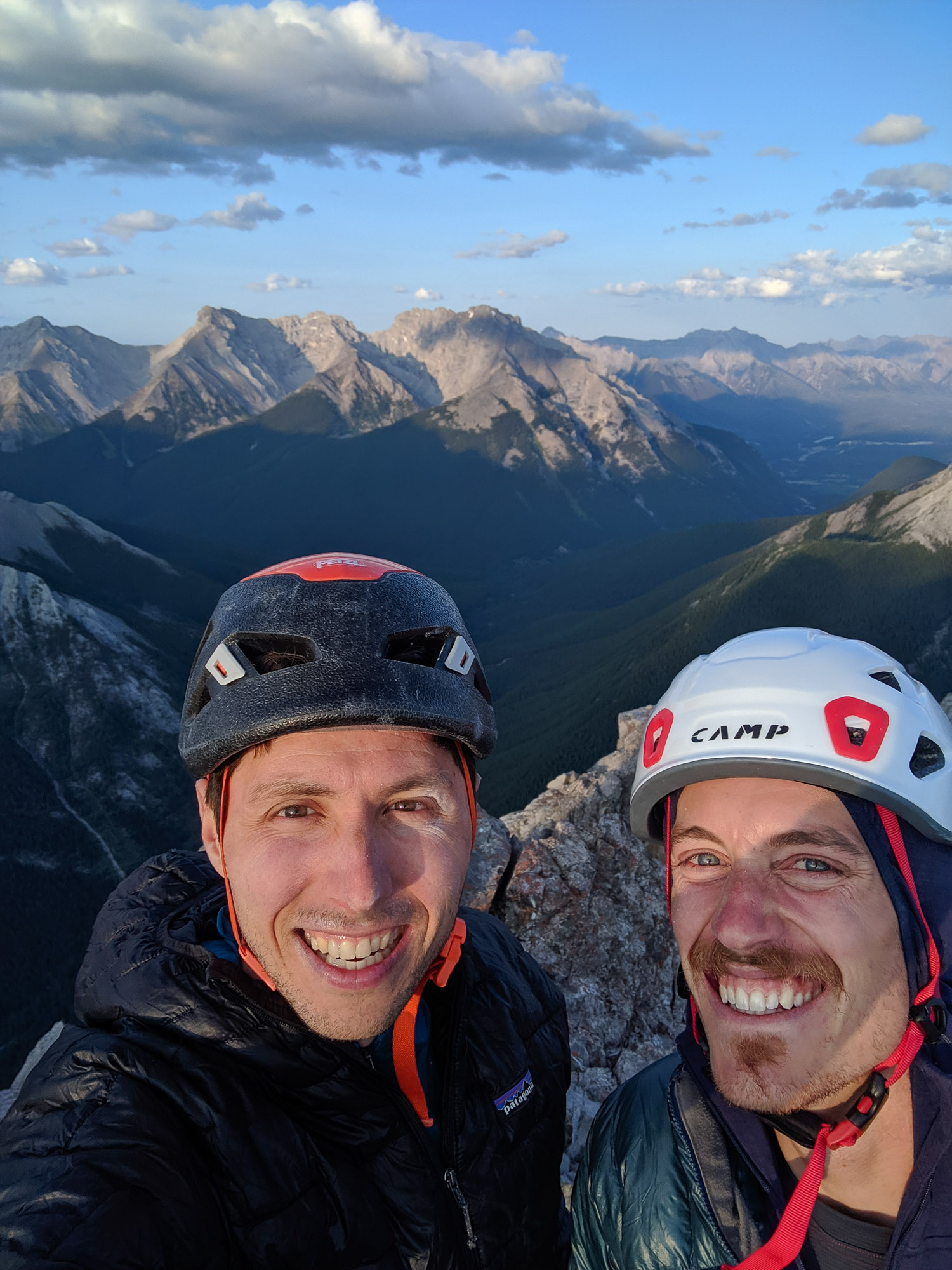 The obligatory selfie.
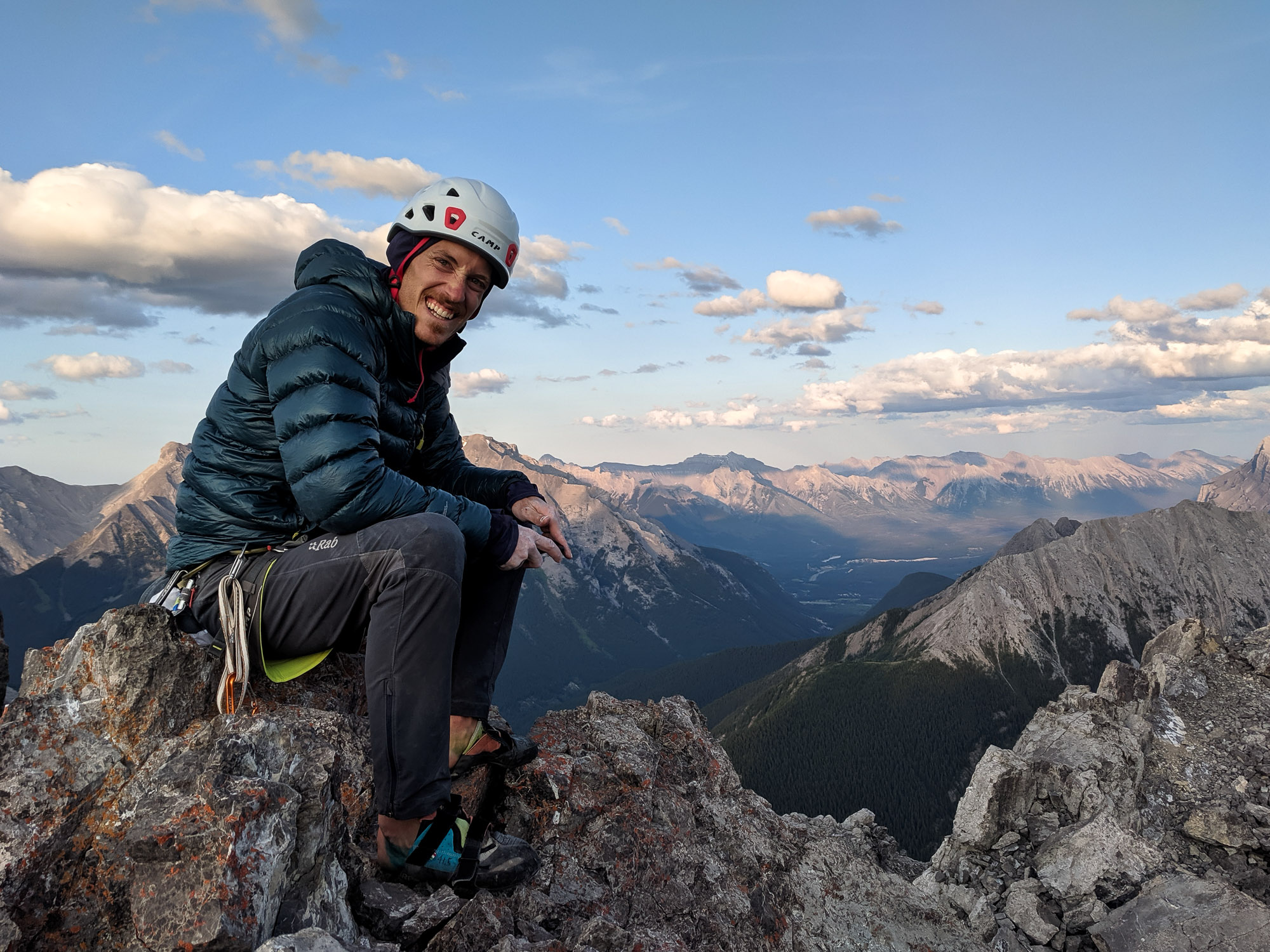 My goofy grin.
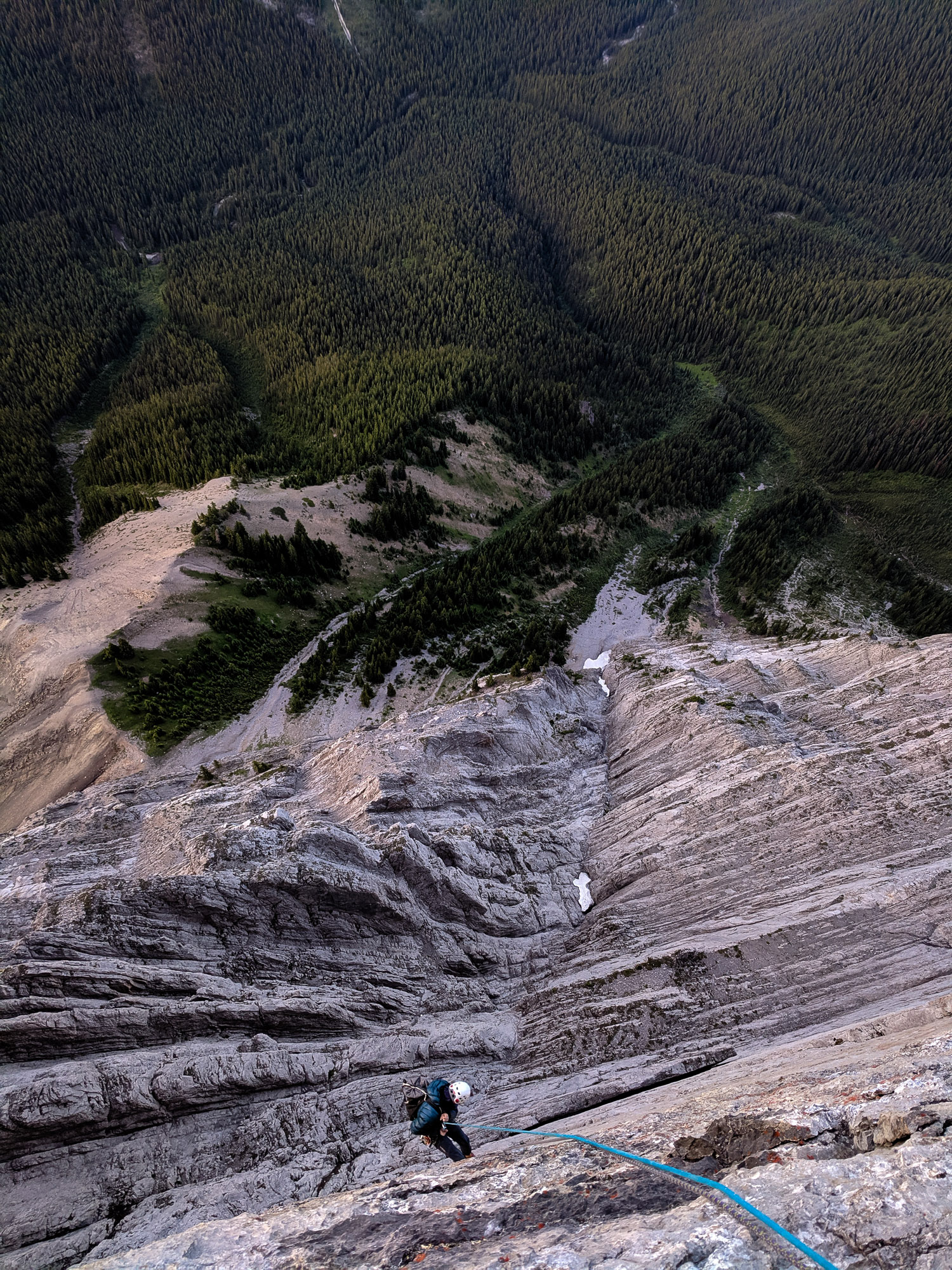 Me starting our second rappel down the headwall.
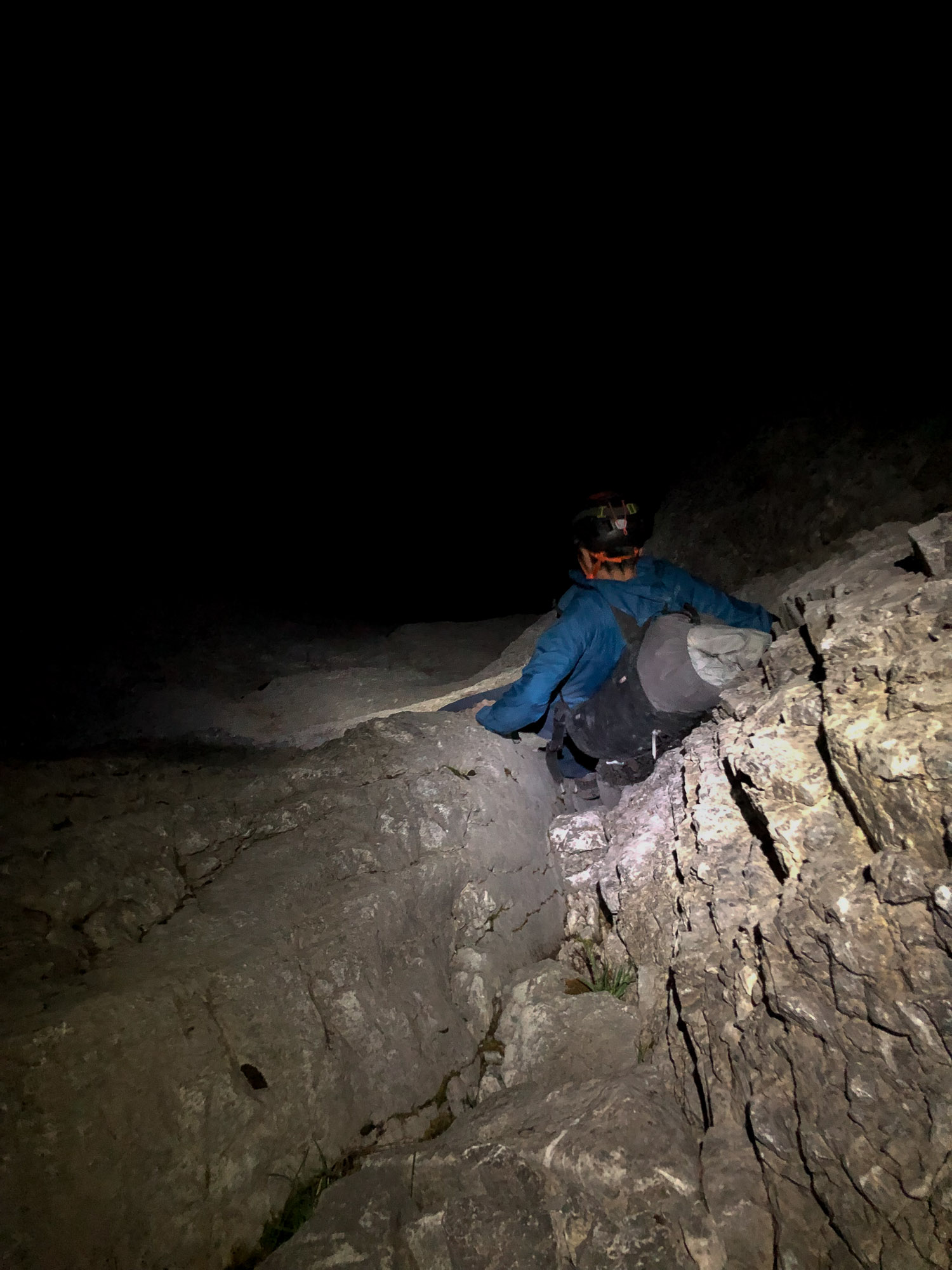 Mike down scrambling in the dark.